Director Wong Kar-Wai and DP Christopher Doyle's 21st century magnum opus "In the Mood for Love" is my 46th favorite movie of all-time, my first favorite film from the director, my first favorite film from the 00s, and my first favorite film from the year 2000. That's a lot of firsts! Not only is the film made by one of my favorite directors and one of my favorite cinematographers, but the film is also the film that gave birth to my love for its two leads: Maggie Cheung and Tony Leung. "In the Mood for Love" is the second part in Wong Kar-Wai's 1960s Trilogy, which is bookended by the superbly paced and interestingly structured, "Days of Being Wild," as well as Wong Kar-Wai's crisply photographed pseudo venture into the sci-fi genre, "2046."
The Chinese title for "In the Mood for Love" is a metaphor for fleeting youth, beauty, and love. The metaphor speaks volumes about the themes of the film. But the English title does a good job too. Maggie Cheung plays a wife of a busy business man (never seen) who's always on the road. Tony Leung's character is a husband of a woman (again, never seen) who tends to work overtime. It turns out that the unseen husband and wife are probably seeing each other given some evidence. Both Cheung and Leung's lonely characters, having bumped in to each other alone around the apartment complex, are starved for love and find it innocently in their occasional meetings. These meetings eventually blossom into some of the most affectionate, yet still innocent, times they'll ever experience. But they can not keep it up because they "won't be like them." Years pass and the romance of lost opportunity is elegantly expressed with voice over and lyrical imagery in typical Wong Kar-Wai/Christopher Doyle style.

My breath is being taken away, and I have goose-bumps just thinking about this fantastic film, bathed in gorgeous reds and greens. This is probably the most romantic and intensely sensual film I have ever seen. It will put you in the mood for love despite the fact that the two leads do not so much as hold hands onscreen. I think that missed opportunities from the past are often experienced as very romantic when one thinks back. The film plays like one of these memories that one or both of the two main characters must have. I am a sucker of nostalgia these days, and Wong Kar-Wai drives into the nostalgia of missed romances exquisitely.

Of course, I can't write a review of this film without saying something about Wong Kar-Wai's excellent use of music. I think it's rare that music is so important in film. Often films lazily use music to stir up emotions that aren't set-off visually. And one thing about old Hollywood films, even though I love them, is their incessant use of music that you can basically just ignore. Here neither is the case. Wong Kar-Wai uses music as if it is another character, coming back to remind us of scenes past. The music complements the visuals (together they entrance the viewer like almost no other film can); it does not try to compete with them. And I would be hard pressed to find anyone who thought they could simply ignore the music's power in this film. The cinematography's greatness goes without saying. Christopher Doyle pours color into every scene making everything from Cheung's dresses to dirty side-streets eye-popping. Wong Kar-Wai and Christopher Doyle's use of low lighting and slo-mo adds intimacy to the atmosphere. If you haven't thought of missed or lost romances in a while, Cheung, Leung, the music, and the cinematography will force you to during and long after you witness this fantastic film.
*As of the publishing of this review, "In the Mood for Love" is Netflix Leaving on October 1st, 2013. A sad day indeed.


 My breath is being taken away, and I have goose-bumps just thinking about this fantastic film, bathed in gorgeous reds and greens. This is probably the most romantic and intensely sensual film I have ever seen. It will put you in the mood for love despite the fact that the two leads do not so much as hold hands onscreen. I think that missed opportunities from the past are often experienced as very romantic when one thinks back. The film plays like one of these memories that one or both of the two main characters must have. I am a sucker of nostalgia these days, and Wong Kar-Wai drives into the nostalgia of missed romances exquisitely.

 Another reason why the film is so good is because of the way De Sica is able to find, in this particular father and son story, a symbol or exemplar of life in post-war Italy more broadly. The father and son face the threat of poverty continually---the viewer is consistently on edge about just how this family will survive. Bureaucracies and faux Oracles can do nothing to help them. The father must eventually take the situation of his stolen bicycle into his own hands. Suffice it to say the film ends tragically. The influence of "Bicycle Thieves" in the history of film is really something. It has inspired everything from the the French New Wave and Satyajit Ray's "Apu Trilogy" to the even more recent Indie Film movement in the states and the Iranian New Wave movement. It's just an all-around well-made film that everyone should see at least once in their lives.

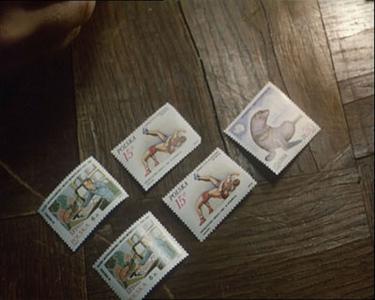 The final part in Kieslowski's brilliant "Dekalog" miniseries is quite the departure from the tone and style of the other episodes. It's a foray into comedy for Kieslowski. The story concerns two brothers, each played by two fantastic actors (they also played brother's in Kieslowski's "Trois Colours: White" as well). One brother is possibly jobless and has a family. The other brother is part of a terrible metal band "City Dead." Neither have much money. However, their father, the stamp collector from episode eight, dies, and, as it turns out, his stamps are worth gobs and gobs of money. Do they keep the collection or pawn it for money? The lust for money leads the two down a slippery slope of greed and mistrust for one another. This is my sixth favorite episode in the "Dekalog" series. I've always enjoyed Kieslowski's attempts at comedy, even though his attempts are often dark rather than light. The end of this episode is a perfect ending to the entire series as well. [spoilers] Though greed gets the best of the two, the mess they find themselves in also reestablishes their relationship as brothers. In the end they even start a new stamp collection, which might indicate that they've learned to honor their father's death instead of treating it as a means to an end.
 The ninth episode of Kieslowsi's "Dekalog" is a vast improvement from the eighth episode. The cinematography, which highlights the more dramatic elements of the story with inventive shots, and especially the music (it made me think of "Blue" in Kieslowski's "Trois Colours Trilogy") are positively perfect. Although one might have expected episode six "Thou shalt not commit adultery" to be about marital infidelity, it is saved for this episode. The episode begins with the husband (a heart surgeon) finding out from his doctor that he has erectile dysfunction. He and his wife must figure out how to work their relationship under such circumstances. Without emotion he honorably tells his wife that, if she decides to stay with him, she can have sexual relationships with other men. Nevertheless, the husband isn't sure of his decision or his wife anymore. He notices a physics notebook in their car, he (though not very tactfully) taps their home phone, and he makes a copy of the key to his mother-in-law's apartment. He suspects his wife is cheating on him with a physics graduate student in his mother-in-law's apartment. There is also a side-story about the heart surgeon's beautiful patient, which reflects his own conundrums. This is my fifth favorite episode. I especially love how just when we think the film has reached it's dramatic conclusion, it has not. The ending is probably the most moving out of all of the "Dekalog" films.
 This episode of Kieslowski's "Dekalog" is about a Polish ethics professor and a younger American colleague. Unlike most of the other episodes, the eighth episode is dialogue-ridden (far too much for my taste). The central issue is set up in a classroom discussion. [spoilers] The American colleague sits in on the ethics professor's class and retells a true story involving her (unbeknownst to the ethics professor) and the ethics professor. The American colleague was once a young Jewish girl in Nazi occupied Poland seeking help from a Catholic family. It just so happens that the matriarch of the Catholic family was the ethics professor. The American colleague ends her story by saying that the Catholic family turned her away at the last minute because, as good Catholics, they could not lie. She then raises the question as to whether anything was more important than a child's life. The film is my ninth favorite in the series for three reasons. First, though I am usually a sucker for tracking shots, I found the hand-held tracking shots here to be artificial and not well-motivated. Second, the dramatic stories of the past are merely recounted verbally. Finally, there's not a whole lot of interesting chemistry between the ethics professor and the American colleague. Nevertheless, this installment still resonates when the ethics professor confesses: "You are right; no ideal is worth more than the life of a child."
